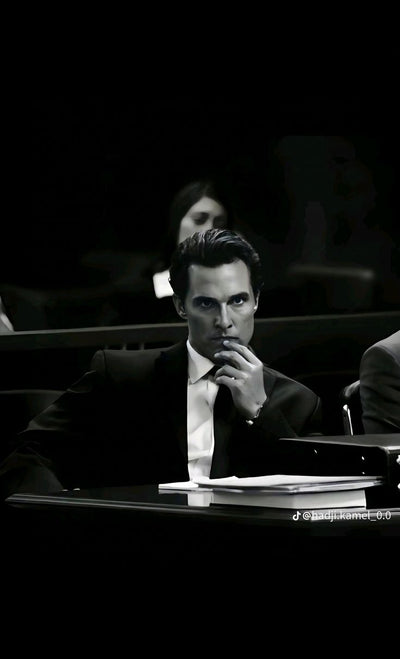
How Does a High-Value Man Behave When Dating? Science and Practice
What do you find when you search for "dating tactics" online? Zodiac advice written from a female perspective, "smile and make eye contact" lists, "don't reply to their message immediately" tricks. Their common feature is this: All of them are written from the perspective of a low-value man. Focused on impressing, tricking, performing.
A high-value man doesn't employ any of these. Because he doesn't need to.
This article does two things simultaneously: it explains what truly works in dating through science, and it shows how a high-value man internalizes this knowledge not as tactics, but as identity.
The Difference Between a High-Value Man and a Low-Value Man
A low-value man approaches dating as a problem. "How can I impress her? What should I say? How should I look?" All his attention is on his own performance, not on the woman in front of him. This effort is visible and kills attraction.
A high-value man approaches dating as a process. "Am I truly interested in this person? Are we a good match?" His focus is not on impressing, but on evaluating. This difference in framework changes everything.
Let's concretize this. Two men encounter the same woman in the same setting:
The low-value man: Internally calculates "what should I say." Compliments the woman too quickly. Smiles for validation. Answers every question immediately. Hesitates twice before asking for her phone number.
The high-value man: Is at ease in the environment. When chatting with the woman, he reacts to something he genuinely finds interesting. At one point, he breaks off the conversation to talk to someone else, then returns. At the end of the conversation, he asks, "Are you free on [day] to continue this?"
The difference is not technical. It's psychological.
At the root of this psychology is this: The low-value man needs the woman's approval. The high-value man doesn't need it, but he is interested. This difference between need and interest determines the entire dynamic in dating. Need creates pressure. Interest creates attraction.
In Niall Bolger and Adam Zuckerman's social psychology studies, individuals with a high need for approval were documented as being more anxious and less attractive in social interactions. This seemingly contradictory finding is actually a simple mechanism: Need is read, and need results in a decrease in value.
Robert Cialdini's extensive work on the psychology of influence shows that scarcity and social proof increase attraction. But there is a huge difference between a man who tries to apply these principles as conscious manipulation and a man who naturally embodies these principles through his real life. One fakes it, the other is it.

What Science Says: What Actually Works in Dating?
Confidence and Status Signals
David Buss, in his 1989 Behavioral and Brain Sciences study, examined 37 cultures. Among the qualities most consistently valued by women in mate selection, resources and status signals ranked high in every culture. But a status signal doesn't mean a luxury car or a title; posture, tone of voice, how you occupy a space, how others treat you – these are all status signals.
Vacharkulksemsuk et al., in their 2016 PNAS study, showed that open and expansive body language increased attraction. A man who slouches, drops his shoulders, and makes himself small gives off low status signals. A man who stands tall, takes up space, and is relaxed gives off high status signals. These are read unconsciously, in seconds, before a conversation even begins.
Amy Cuddy, in her 2010 Harvard research, showed that power poses not only signal outward but also inwardly change the balance of cortisol and testosterone. So, your posture is both a signal and a reality.
Practice: Don't try to gather yourself when you walk into a room. Let your arms hang freely, open your shoulders, move slowly. Fast and tense movements signal anxiety. A man who moves slowly is a relaxed man.
Humor and Intelligence
Gill et al., in their 2014 Evolutionary Psychology study, showed that women cannot consciously distinguish intelligence from humor because the brain processes humor as a quick indicator of intelligence. A truly funny man is perceived not just as entertaining, but as intelligent.
The same study revealed that the quality of being "quick-witted," meaning the ability to instantly perceive and comment on a situation, was found to be more attractive than mere wit.
But there's a critical distinction here: the man who tries hard to be funny versus the man who makes a natural observation by seeing the situation. The former seeks approval. The latter enjoys himself. This difference is instantly felt.
Practice: Observe the common situation, and say what's on your mind out loud. Something like, "That guy's been spinning the same glass for hours, I think this conversation is about to wrap up." Not a pun, but an honest and sharp observation.
Mystery and Scarcity
Lee Ann Renninger, in her ScienceDirect study, showed that "access restriction" behavior significantly increased attraction. But this is not merely a trick like "reply to her message late"; it's an indication of a genuinely full life and being selective.
Zygmunt Bauman's observation on modern relationships summarizes this well: People desire most what they cannot have. But the meaning of this is not to artificially make oneself scarce; it is to truly live a full life and openly display it.
Practice: Continue with your own life during the dating process. Set up the date for that night, but you have other plans for the weekend. Your life goes on – this isn't a performance, it's real. And this reality is perceived.
First Seconds: Visual and Social Signals
Princeton University psychology researchers Janine Willis and Alexander Todorov, in their 2006 Psychological Science study, showed that people form judgments about trustworthiness, competence, and attractiveness in just 100 milliseconds. The decision is often made before the conversation even begins.
These judgments are not definitive; they can be corrected, but the first seconds establish a framework. The high-value man's advantage begins here: a relaxed, comfortable, space-occupying man is perceived differently from the first glance.
Dating Tactics of a High-Value Man
I'm using the word "tactic" here deliberately. But let's be clear: these tactics are not the games of a low-value man, but internalized principles that a high-value man puts into practice. The difference is this: a low-value man applies tactics, and it shows. A high-value man has internalized tactics, and they have become his natural behavior.
1. Selective Interest — The Strongest Signal
A man who gets excited for everyone, pouring the same energy into every woman, does not signal value. A high-value man reacts to what he genuinely finds interesting and moves past the rest.
This is not a game. Seriously, don't treat everyone in the crowd the same way. Find something genuinely interesting in the woman you're talking to and address only that. Like, "Most people don't explain this topic that way," or "I haven't heard that perspective before." Specific, an interest.
Matthew Lieberman, in his 2011 UCLA research, showed that social reward, the feeling of recognition and special attention, powerfully activates the brain's reward system. Genuine interest leaves a much deeper impression than a fake compliment. And the brain instantly detects the fake.
2. Framing Power — Who's Leading?
A high-value man sets the course of the conversation. He doesn't get defensive, doesn't feel compelled to explain himself, doesn't need validation.
When she questions you: Not defense, but curiosity. "Why do you think that?" When she tests you: Play along, but don't try to win. Make your joke and move on.
Who determines the frame, and who reacts to that frame—this distinction reveals the power dynamic. A man who confidently and loosely directs the conversation is, by definition, the man who holds the frame.
3. Genuine Curiosity — Not a Trick
Is it a "I'm listening to you" performance or genuine curiosity? The difference is felt instantly.
Genuine curiosity works like this: When she tells you something, return to a detail that stuck in your mind. Ten minutes later, say, "Tell me more about that thing you mentioned earlier." Don't look at your phone. Don't look at other things while she's talking. This combination of memory and attention is rare, and what is rare is valuable.
When people feel truly listened to, they open up more to you, become more interesting, and remember you differently.
4. Social Comfort — Not Anxiety
A high-value man is comfortable in his surroundings. He speaks politely to the waiter, makes space for those around him, and is not bothered by silence. He doesn't rush to fill the void when a conversation pauses.
This comfort is not performative; it's real. And true social comfort is the complete opposite of anxious "how do I look" energy. Women read this difference in a matter of minutes.
How you treat those around you also conveys a signal. A man who is rude to the waiter and dismissive to the cleaning staff is using his high status in a false, not genuine, way. This inconsistency is immediately noticed.
5. Physical Touch — Natural and Measured
Lee Ann Renninger's research revealed that physical touch in dating is most effective when it shows a four-stage progression: shoulder/arm → waist → hand → face. Each stage progresses based on the reaction to the previous one.
A high-value man does this not by forcing it, but within the natural flow of conversation. Touching her shoulder when she laughs, getting closer when showing something. Read the reaction: did she lean in, move away, freeze, or reciprocate? This reaction tells you the next step.
Forcing advancement is both off-putting and disrespectful. True comfort grows together on both sides.
6. Open-Ended Exit — Close the Outcome
A low-value man leaves the door open for validation: "I hope we see each other again." A high-value man ends the conversation at its peak and proposes something concrete or opens the door for a proposal.
"This conversation was interesting. Are you free on [day] to continue?" This sentence does several things at once: It shows you are selective, closes uncertainty, and you are in control of the timing.
A man who is afraid to ask for a number prefers uncertainty – this protects him, not his fear of rejection. Being concrete takes courage but works much better than uncertainty.
Mistakes Made by a Low-Value Man
If you feel uncomfortable reading this section, you're probably doing one of these things. This section is for recognition, not criticism.
Excessive compliments: Admiring her beauty at the first meeting is both predictable and devaluing. A physical compliment early on is neither interesting nor original; every other man around her has already said the same thing. Compliment her for something she said or did, if there is anything. Otherwise, don't compliment her.
Seeking validation: Questions like, "What did you think?", "Was it good?", "Did you like it?" Each of these paints a portrait of a man seeking validation. A high-value man stands behind his decisions and doesn't seek approval. He trusts his own choices.
Excessive availability: Being reachable at all times, accepting every date, replying instantly to every message. You either don't have a full life, or it appears that way. Both give the same signal.
Telling everything: Introducing yourself is important in dating, but a man who spills his entire life story on the first night exhausts his interest. As much as you tell, that much mystery remains. Keep some things to yourself. Mystery creates value.
Not closing the deal: The conversation is going well, but he's hesitant to ask for a number or suggest a date. This uncertainty protects him, not you. Be concrete, be clear. Fear of rejection makes one prefer uncertainty, but uncertainty is the kiss of death in dating.
Working too hard: Carrying the conversation alone, constantly opening new topics, racing to fill silence. If the conversation is one-sided, either it's not working, or you're working too hard. Neither is good.
Getting defensive: Feeling compelled to explain yourself immediately when questioned, tested, or slightly provoked. A defensive posture is a low-value signal. A high-value man is curious when questioned, not defensive.
Entering a rivalry: If there's another man in the environment and you feel compelled to enter a silent competition with him, that energy itself is the problem. A high-value man competes with himself, not with others.

Online Dating: Same Principles, Different Arena
Tinder, Instagram DMs – online dating seems like a different game. It isn't. The same principles apply; only the format changes.
Profile: Status signals apply here too. Your photos should show you in different environments, active and social. A collection of only selfies doesn't signal value. Group photos, active hobbies, social settings – these indicate a full life.
First message: Not just "Hi" followed by a question. Comment on something that genuinely caught your attention in her profile or say something unique to her. This shows genuine curiosity and sets you apart from the crowd.
Pace: Follow the message traffic, but don't reply to every message within seconds. You have a full life. This isn't a performance; if you truly have a full life, the pace adjusts itself.
Transition: Don't endlessly prolong online conversation. At some point, say, "We can talk about this better on the phone or in person." A man who hesitates to make the transition is protecting uncertainty – this protects him, not his fear of rejection.
First Date: The High-Value Man's Framework
If the first date feels like an interview, you're doing it wrong.
A low-value man comes to the first date prepared with a list of "what to ask, how to impress." A high-value man comes to the first date with curiosity: "is this person interesting, are we compatible?"
The practical difference is huge: while a low-value man's date feels like an exam, a high-value man's date feels like a conversation. One has the pressure to perform, the other has the energy of discovery.
Choosing the venue: Pick a place that facilitates conversation. Not a noisy bar, but a small and intimate spot. A two-person table, seats close to each other. This physical comfort paves the way for emotional comfort. The environment should support the conversation, not compete with it.
Conversation balance: You ask questions, but you also add your own perspective to each question. The format is "what do you think, I think..." A man who only asks questions feels like a reporter; it's an interrogation, not a mutual discovery. Express your own opinions, values, and perspectives.
Moments of disagreement: Don't soften it when you disagree. Not like "Yes, but you're also right." Rather, "I disagree, actually, I think..." A polite but clear disagreement is both a sign of confidence and a mark of a genuine conversation. A man who agrees with everything is either thoughtless or seeking approval.
Phone: Don't check your phone during the date. This is still a rare behavior in 2026, and that's precisely why it's a powerful signal. Giving genuine attention to the person in front of you is rare, and what's rare is valuable.
The bill: In the early stages of dating, the man paying has long been an established expectation. There's no need to make a big deal out of it; pay silently. If she objects, say "my treat this time" and move on. Don't create drama.
Ending the date: A high-value man ends the date at its peak, not on a decline. When the conversation is going well, you can say, "I'd love to continue, shall we meet again?" This both sparks curiosity and leaves a strong ending. Not a date that drags on for hours, but one that ends with the feeling of "I wished it would continue."
Red Flags in Dating: When Not to Proceed?
A high-value man knows not only how to act but also whom to choose. Dating is not just about attraction; it's about evaluation.
Constantly late replies + vague plans: Occasionally late replies are normal. But systematically vague, half-finished plans, and last-minute cancellations signal energy. This energy doesn't change.
Constant complaining: Someone who constantly criticizes others, the environment, or life on a first meeting will likely criticize you too. It's good to see this early.
Inconsistency: One day very warm, the next cold. This fluctuation is not excitement; it's indecision or manipulation. Both require caution.
Boundary testing: Constantly refusing small requests, putting you in a state of waiting, keeping things up in the air with "we'll see" — these are behaviors that test power dynamics.
When a high-value man reads these signals, he doesn't get defensive or demand explanations. He updates his assessment and, if necessary, doesn't proceed. This is not coldness; it's clarity.
More with the Archive of the Elite Man
Internalizing what's described in this article and transforming knowledge into identity takes time. There's a world of difference between reading a principle and applying it naturally under pressure.
Knowledge is the first step. But knowledge is not application. You say, "show selective interest," you understand, but in the first tense conversation, you switch to "how do I look" mode. This is normal. That's why internalization is necessary.
The Archive of the Elite Man structures this transformation process in book format: from attraction psychology to social dynamics, from communication strategies to identity building. Not just information, but a system. 7 books, a single framework: from ordinariness to elite status.
For those who wish to go further, in our one-on-one consultations, we work on applying these principles to your unique situation, focusing not on dating tactics, but on the high-value man framework. Because every man's starting point, sticking points, and goals are different.
The Archive of the Elite Man: erkekbenligi.com/products/seckin-erkegin-arsivi-7-kitapta-hukmetme-ustaligi
For all products and consultation: erkekbenligi.com/collections/all
Identity Building in Dating: Foundation Before Tactics
Applying what's been explained so far requires a solid foundation. Without that foundation, tactics remain suspended in mid-air.
Social life: The quickest way to appear high-value in dating is to actually live a high-value life. This is not abstract: Meaningful friendships, pursuits, hobbies, plans. These are the raw materials for the "full life" signal.
Physical condition: Investing in your body has a direct impact on both signals and hormones. Regular exercise directly affects testosterone levels, self-confidence, and body language. This is for self-respect, not for dating, but the results also reflect in dating.
Social breadth: A man who is comfortable in various social circles carries a different energy than one who is only comfortable "in his own group." Practice talking to people you don't know. This is not a talent, but a habit.
Framing rejection: Every rejection is not a failure, but information. "This person and this moment were not suitable" vs. "I am inadequate" - these two frames process the same event entirely differently. A high-value man integrates rejection into his information, not his identity.
The central irony in Neil Strauss's book The Game was that the men who learned dating techniques the most eventually realized that true attraction was not a matter of technique but of being. But they reached this point by learning techniques because there's no internalization without practice.
Therefore, both learn the information and apply it. But let your ultimate goal not be technical expertise, but the person you are.
Identity, Not Tactics
The real question for the man looking for dating tactics is not: "What should I do?" The real question is: "Who should I be?"
A high-value man is not successful in dating because he knows the right tactics. He is successful because the person he already is is attractive. Tactics are an expression of that identity, not a costume.
A man who loses this framework, no matter how much technical knowledge he acquires, remains performative. And performance is always felt. Women read this in a few minutes because they are evolutionarily selected to read this distinction.
Real attraction is built. Not externally, but internally. Start here.