What is the Dark Triad? The Unseen Side of Power (Complete Guide)
If you search for "dark triad" online, you'll encounter two types of content. First: "Men with these traits are woman magnets, you should be dark triad too." Second: A cold, clinical definition from a psychiatry textbook.
Neither tells you anything useful.
This article is written for those who genuinely want to understand the dark triad. We'll explore how its three components work, how they reinforce each other, why this personality develops, how it manifests in daily life, and what it means from a male perspective, all through a scientific lens combined with practical insights.
What is the Dark Triad?
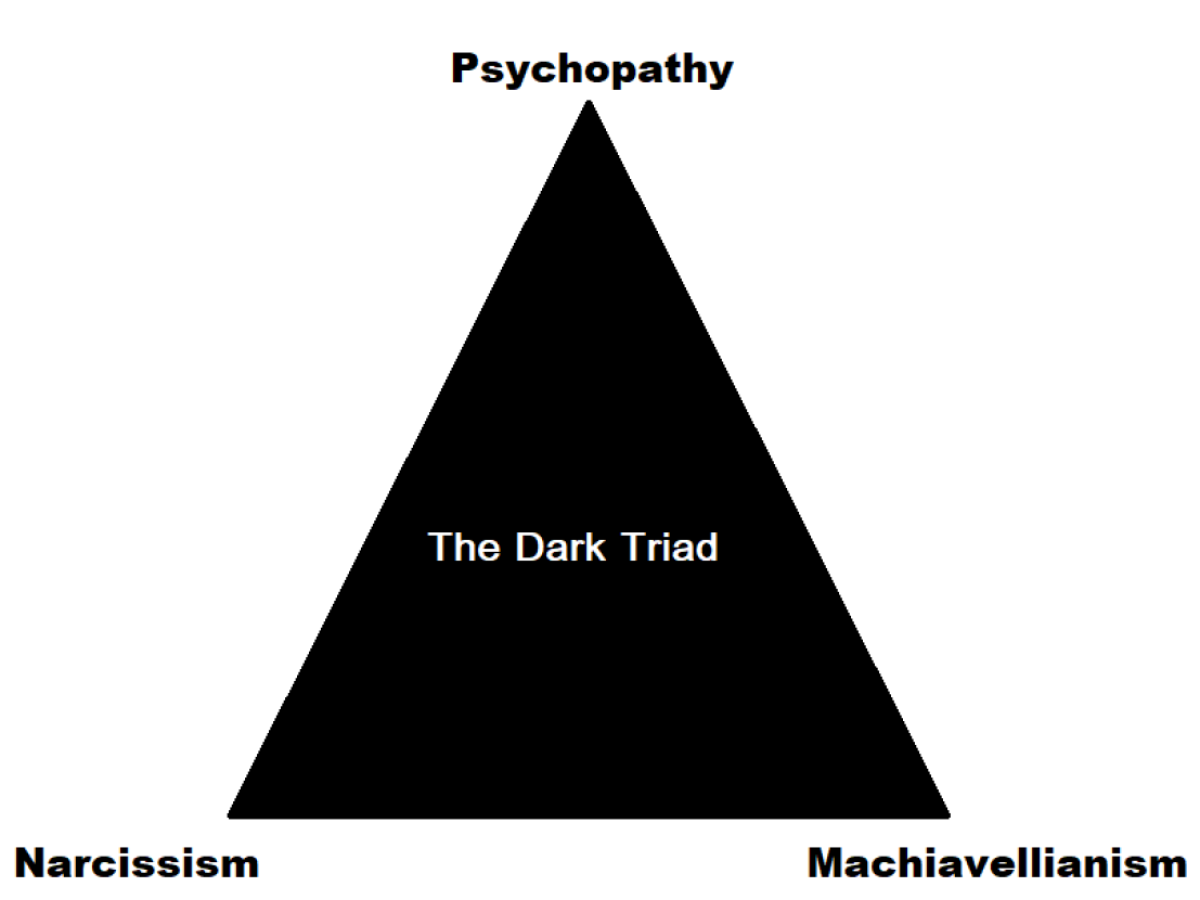
The Dark Triad is a constellation of three personality traits, identified by Delroy Paulhus and Kevin Williams in 2002: narcissism, Machiavellianism, and psychopathy.
These three traits can exist independently. However, when they appear together, they form a structure that feeds and strengthens each other. What makes the Dark Triad dangerous is not a single trait, but this synergy itself.
An important note: This personality structure does not require a clinical diagnosis. It can exist at a "subclinical" level, meaning it doesn't meet the criteria for a disorder but is clearly visible in social interactions. These individuals can appear in your life daily: at work, in social circles, in romantic relationships.
Narcissism: Fragile Superiority
What is narcissism?
Narcissism is a personality pattern characterized by seeing oneself as superior to everyone else, a constant need for admiration and validation, extreme reactivity to criticism, and difficulty with empathy.
A common misconception is that narcissists are very self-confident. In reality, the opposite is true. Narcissism is rooted in a deep fragility. The image of superiority is entirely dependent on external validation; this image stands as long as others approve of it. When criticism, rejection, or failure threatens this image, the reaction is disproportionate.
Difference between overt and covert narcissism
There are two main forms of narcissism:
Overt narcissism: Grandiose, attention-seeking, openly seeing oneself as superior. It's relatively easy to recognize in social settings. Carries the energy of "I am the smartest person in the room."
Covert narcissism: Much more insidious. Outwardly, they may appear shy, victimized, or humble, but they harbor the same belief of superiority within. The difference is this: Instead of demanding admiration, they feed on feeling misunderstood or unappreciated. The narrative "No one knows my worth" is central to this type.
Covert narcissists are much harder to identify in relationships and are much more destructive.
How does narcissism appear in a relationship?
- Excessive investment in the initial stage: "Love bombing" with intense attention, compliments, the message "I have a very special bond with you."
- Devaluation afterward: Small criticisms, comparisons, behaviors that make you feel unbalanced.
- Abandonment or counter-attack when they lose control.
A narcissistic partner constantly wants to be the center of the relationship. While your success, attention, and energy flow to them, the relationship "goes well." When you bring up a need or an agenda, the relationship sours.
Delroy Paulhus and Kevin Williams, in their 2002 study in the Journal of Research in Personality, showed that narcissism is the most "social" component among the Dark Triad traits; it contributes most to superficial charm.
Machiavellianism: Strategic Manipulation
What is Machiavellianism?
This name, derived from Niccolò Machiavelli's "The Prince," describes a tendency to manipulate for self-interest, view people as means to an end, engage in long-term strategic calculation, and disregard moral concerns.
The key characteristic distinguishing Machiavellianism from the other two components is: long-term planning. While a psychopath acts impulsively and a narcissist seeks validation, a Machiavellian waits patiently. They know when to make their move.
How does Machiavellianism work?
In the mind of a Machiavellian, every relationship is a cost-benefit analysis. They invest in you, but this investment is proportionate to the expected return from you. When the cost of forming a relationship outweighs the expected benefit, the relationship ends.
Some individuals consciously calculate this, while others do it entirely automatically. But the outcome is the same.
Concrete tactics of Machiavellianism
Information gathering: They ask you questions, encouraging you to share secrets. This both creates a bond and accumulates information they can use later.
Creating obligation: They do you a favor, claiming they expect nothing in return. But when the time comes, they use this favor as leverage.
Triangular dynamic: They use others against each other. By carrying information between two people, they keep both beholden to them.
Gaslighting: They make you question the reality of what happened. "I didn't say that," "you're too sensitive," "you're imagining this" are tools of frame control used by Machiavellians.
Timing: They appear precisely when you need them, making you feel indebted.
Early work on Machiavellianism by Richard Christie and Florence Geis (1970, Studies in Machiavellianism) showed that these individuals are more successful at manipulation due to emotional distance because they are unaffected by the other person's reactions.
Psychopathy: The Cold Engine
What is psychopathy?
Psychopathy is characterized by a lack of empathy, an absence of conscience, superficial charm, impulsivity, fearlessness in taking risks, and an inability to feel remorse.
Common misconception: Psychopath = killer. In reality, psychopathy exists on a broad spectrum. Subclinical psychopathy, a level that doesn't reach the threshold of a clinical disorder, is very common in the business world, social circles, and relationships.
Difference between primary and secondary psychopathy
Primary psychopathy: Largely genetically based. A profound emotional void, an absence of anxiety capacity. These individuals are genuinely calm under pressure because they perceive no internal threat.
Secondary psychopathy: Trauma-based. Develops as a result of early emotional neglect or abuse. They haven't lost emotional capacity but have cut off access to it. Unlike primary psychopaths, they can explode under pressure.
This distinction is important: Secondary psychopathy is theoretically more open to change, but it is still an extremely challenging process.
How does psychopathy appear in professional life?
Babiak and Hare's "Snakes in Suits" (2006) study examined corporate psychopaths. Findings: Psychopathic traits are observed at a much higher frequency in management levels compared to the general population.
Why? Risk tolerance facilitates quick decision-making. Individuals who pose obstacles can be easily sidelined without moral restraint. Superficial charm makes a strong first impression.
These provide short-term advantages. In the long term, they harm the organization.
How does psychopathy appear in a relationship?
- A flat reaction to their partner's pain.
- No remorse, or performative remorse.
- Constantly testing and violating boundaries.
- Changing the subject or counter-attacking when caught.
- Coldness, but this is not strength, it's emptiness.
The Synergy of the Three Components: Why Is It So Powerful?
What truly makes the Dark Triad dangerous is not a single trait, but how the three feed off each other.
Narcissism provides the goal: The fantasy of superiority drives the narcissist to constantly want more. This need guides Machiavellianism; it knows what it wants.
Machiavellianism provides the tools: Strategic manipulation determines the method for the narcissist to achieve what they want. But this strategy is not limited by emotion.
Psychopathy provides the lack of brakes: The absence of empathy and conscience allows for the unlimited application of Machiavellian strategy. The other person's suffering does not necessitate stopping.
An individual in whom these three work together can: clearly see what they want (narcissism), strategically calculate how to get it (Machiavellianism), and encounter no moral obstacle in implementing it (psychopathy).
Why Does the Dark Triad Develop?
Evolutionary explanation
Peter Jonason and his team, in their 2009 study in the European Journal of Personality, suggested that the Dark Triad evolutionarily facilitated a short-term mating strategy. In resource-scarce environments and distrustful communities, these traits might have provided a survival advantage.
But this does not mean it is "natural" or "inevitable." Many traits with an evolutionary past are not adaptive in modern life.
Attachment theory explanation
John Bowlby's attachment theory and subsequent research showed that early attachment patterns deeply influence adult personality development.
Insecure attachment, especially avoidant attachment, has been consistently linked to Dark Triad traits. Inconsistent, rejecting, or emotionally unavailable caregivers in early life can lead a child to conclude: "Others cannot be trusted, I must protect my own interests."
This conclusion forms the basis for both Machiavellian strategy and emotional distance.
Trauma and secondary psychopathy
Early neglect, abuse, or emotional deprivation can disrupt emotion regulation. Shutting down emotional capacity is a defense mechanism; what doesn't hurt can't harm. Over time, this mechanism takes on a psychopathic appearance.
Why Do Dark Triad Individuals Seem Attractive?
First impression advantage
Back et al., in their 2010 study in the Journal of Personality and Social Psychology, showed that narcissists appear particularly attractive and charismatic upon first meeting, but this effect reverses over time.
The Dark Triad is optimized for first impressions. Superficial charm, signals of self-confidence, courage in taking risks – these are read as strong indicators of status in the short term.
Uncertainty and the dopamine cycle
Wolfram Schultz's dopamine research (1990s, Nature) showed that irregular rewards create stronger addiction than predictable rewards. The hot-and-cold cycle created by a Dark Triad individual triggers this mechanism.
It's easy to confuse the feeling of addiction with the feeling of attraction. Both appear very similar at a brain level.
What does science say?
Nicholas Holtzman and Michael Strube, 2010, Journal of Research in Personality: Dark Triad traits increase ratings of physical attractiveness, but this effect comes from a groomed appearance. Dark Triad individuals exert more effort to present themselves.
Peter Jonason et al., 2012: Dark Triad men reported more short-term partners but experienced significant disadvantages in long-term relationships.
Marcus Mund and Franz Neyer, 2014, European Journal of Personality: Dark Triad traits showed a consistent negative correlation with relationship quality.
Summary: The Dark Triad opens doors in the short term, but closes them in the long term.

The Difference Between a Dark Triad Individual and a High-Value Man
A Dark Triad personality can outwardly resemble some behaviors of a high-value man. The underlying motivation is completely different.
| Behavior | Dark Triad | High-Value Man |
|---|---|---|
| Setting boundaries | No empathy, doesn't care | Has values, doesn't compromise |
| Selectivity | Calculated strategy | Has genuine standards |
| Composure | Emotional flatness | Emotional maturity |
| Self-confidence | Narcissism | Genuine self-worth |
| Attraction | Manipulation + scarcity | Identity + consistency |
Joey Cheng and her team, 2010, Psychological Review: The two sources of dominance are fear and respect. The Dark Triad dominates through fear. A high-value man dominates through respect. In the long run, respect-based dominance is much stronger.
How Do You Identify a Dark Triad Person in Life?
Signs of Narcissism
- Constantly steers conversations back to themselves; quickly shifts your agenda to their own.
- Becomes disproportionately puffed up when complimented, disproportionately furious when criticized.
- Performs empathy but it's hollow, saying "that's so hard" then changing the subject a minute later.
- Exaggerates their successes, blames others for their failures.
- Is bothered by the success of others.
Signs of Machiavellianism
- Every good deed will eventually be repaid.
- Adjusts the warmth of relationships according to their own benefit.
- Shares secrets, gets you entangled.
- Does not hesitate to use others against each other.
- Gaslighting: "I didn't say that," "you're too sensitive."
Signs of Psychopathy
- No remorse, or performative remorse.
- Doesn't admit their own mistakes, changes the narrative.
- Blunted reaction to others' pain.
- Constantly tests and violates boundaries.
- Arbitrarily follows rules when it suits them, not out of necessity.
Why Does the "Be a Dark Triad" Advice Not Work?
It cannot be imitated. Dark Triad personality is related to deep structures formed in early development. A man who tries to "mimic" narcissism either doesn't develop true narcissism or puts on a fake performance, and that performance is always felt.
It might work in the short term, but it destroys in the long term. Jonason and team, 2010: Dark Triad traits hinder long-term commitment.
It misses the point. The man trying to be a Dark Triad avoids asking the real question: "Why do I need so much validation right now?" To answer this question, you can refer to the male psychology article.
If You Are in a Relationship with a Dark Triad Person
They don't change—at least not easily. Change requires this person to want to change themselves and seek long-term professional support. The idea of "I can change them" is both naive and dangerous.
They use you as a tool. Warm moments in the relationship are not genuine, they are tactical.
Recognize manipulation. Richard Solomon and John Corbit, 1974, Psychological Review, opponent-process theory: deprivation following intense stimulation increases the need for that stimulation. The hot-cold cycle triggers this mechanism. The argument "but there were good moments too" is part of this cycle.
Set boundaries, observe the reaction. How do they react when you set clear boundaries? With respect, pressure, or disregard? This reaction tells you a lot.
Where Is True Power?
The qualities that make the Dark Triad seem attractive—boundaries, selectivity, coolness, self-confidence—you can build all of them without pathology.
Value-based boundaries: Saying "no" doesn't come from a lack of empathy, but from knowing what isn't right for you. This boundary is stronger because there's a genuine value behind it.
True selectivity: When you have standards, you don't imitate it, you simply act that way.
Emotional maturity: Remaining calm under pressure comes from maturity, not suppressed anxiety.
Self-confidence: Narcissism is fragile and dependent on external validation. True self-confidence processes criticism and remains unbroken. We have discussed this building process in detail in the articles How to build self-confidence and What is a dominant man.
The Archive of the Elite Man
Understanding the Dark Triad is a start. If you want to grasp social dynamics, power frameworks, and the psychology of attraction as a whole, you need to build this systematically.
The Archive of the Elite Man establishes this framework in 7 books: from the psychology of attraction to social dynamics, from identity construction to communication strategies.
The Archive of the Elite Man: erkekbenligi.com/products/seckin-erkegin-arsivi-7-kitapta-hukmetme-ustaligi
All products: erkekbenligi.com/collections/all
The Dark Triad is Not a Goal, But a Map
What do you gain by understanding the Dark Triad?
You recognize this personality structure in the people around you. You distinguish which "powerful" behavior is genuine and which has pathological origins. You understand why narcissism is fragile, how Machiavellianism works, and why psychopathy develops.
And most importantly: you see that the impact you want to create with these traits—boundaries, self-confidence, selectivity, coolness—can be built on a different foundation. This construction is slower. But it is much more solid and much more real.
Being a Dark Triad is not a goal. Understanding it—why it develops, how it works, why it seems attractive in the short term, and what it leaves behind in the long term—is a stage every man who truly wants to grasp social dynamics must pass through. A man equipped with this understanding knows himself better and reads others much more clearly.
The Dark Triad Spectrum: Does Everyone Have a Little Bit?
This question is important because it is often misleadingly used.
Yes, these traits exist on a spectrum. Healthy narcissism—valuing oneself, setting boundaries—is different from pathological narcissism. Thinking strategically is not Machiavellianism. Being able to establish emotional distance is not psychopathy.
However, jumping from the inference "everyone has a bit of the dark triad" to the advice "be a bit more dark triad" is incorrect. Being on the healthy end of the spectrum is not the same as consciously walking towards the pathological end.
If you notice these patterns in yourself—a tendency to act manipulatively under stress, an excessive need for validation, difficulty with empathy—these are not traits to be developed, but underlying patterns that need to be resolved. Recognizing this difference is already a step ahead: a true Dark Triad personality typically does not perceive their own traits as a problem.
Dark Triad Test: Is Measurement Possible?
Two common tools are used in the psychology literature to measure the Dark Triad.
Dirty Dozen: Peter Jonason and Gregory Webster, 2010. A 12-item short scale. 4 items for each component. Used for quick screening but has limited depth.
Short Dark Triad (SD3): Daniel Jones and Delroy Paulhus, 2014. A 27-item scale. 9 items for each component. Provides more reliable results in research settings.
You can find these tests online. Two important caveats:
First, a high score is not a clinical diagnosis. It was developed as a research tool.
Second, and this is critical, Dark Triad personalities may not honestly reflect their traits on these tests. Self-report scales may have low reliability for these individuals. The most accurate assessment comes from the observations of others, not from their self-statements.
Dark Triad and Alpha Male: Two Commonly Confused Concepts
These two concepts are often equated on the internet. Certain circles, in particular, frame Dark Triad traits as "natural alpha." This is incorrect and an important distinction.
True alpha behavior—setting boundaries, selectivity, remaining calm under pressure, social leadership—can stem from psychological health. The Dark Triad produces the same outward manifestations but with a completely different engine.
The practical test is this: Is this person selective because they genuinely have standards, or because they view people as tools? Is this person setting boundaries because they have values, or because they don't care? The first answers indicate a healthy high value. The second answers indicate the Dark Triad.
Answering this question at first glance is difficult. Behavior under time and pressure is the most reliable indicator. A Dark Triad personality drops their mask under pressure—anger, coldness, aggression, or complete indifference emerges. We discussed this distinction more broadly in the article Alpha male traits.