What is Rizz (Charisma)? Can "Devil's Feather" Be Earned?
In 2023, Oxford University Press announced its word of the year. The word chosen, beating out strong contenders like "Swiftie" and "situationship," was a single-syllable, slang term:
Rizz.
But why did this word spread so quickly? And more importantly, is there any real substance behind it, or is it just a fleeting internet trend created by Gen Z?
The answer might surprise you.

What is Rizz? The Origin of the Word
"Rizz" is a slang term derived from the word "charisma." It was first popularized by Twitch streamer Kai Cenat in 2021-2022. The meaning is simple: the ability to attract someone through style, charm, or attractiveness.
Its closest translation into English might be "charm" or "game," but neither perfectly captures it. Because rizz doesn't just come from external attractiveness; it also stems from social energy, quality of conversation, and an authentic presence.
One event played a critical role in the word's global explosion: Spider-Man actor Tom Holland said in an interview that he had "no natural charisma" and his "rizz was zero." The internet took this and the word's usage increased 15-fold in just a few weeks compared to the previous year.
So what does this rapidly spreading word signify? And why have people embraced it so thoroughly?
The Millennia-Old History of Charisma
"Rizz" is a new word, but the concept behind it is thousands of years old.
In Greek, "charis" means divine grace and beauty. In Christian theology, "charisma" referred to charismatic gifts, special abilities given by God to people, such as speaking, healing, prophecy.
It was the German sociologist Max Weber who brought this concept from its religious roots into social science. In the early 20th century, Weber developed the concept of "charismatic authority": certain individuals possess extraordinary qualities that mesmerize others and rally them around the leader. According to Weber, charisma is not a personality trait but a social relationship; charismatic power exists through the people who recognize and connect with it.
This point is critical. And modern science confirms Weber.
In medieval Europe, charisma took on a more practical meaning. In an era dominated by oral culture, oratorical skills and the ability to mobilize people could be more decisive than political and military power. Consider figures like Joan of Arc: she led people not with physical strength, but with her undeniable presence.
How Science Unpacks Charisma
Ronald Riggio is a professor of leadership and organizational psychology at Claremont McKenna College. He has been researching charisma for over 45 years. In an article published in Psychology Today in 2023, he divides the concept of rizz/charisma into five dimensions:
1. Emotional Expressiveness The most basic layer. People who can express their emotions spontaneously and authentically through their face, voice, and movements make much stronger impressions in initial encounters. Research published by Riggio and his colleagues in 1988 (Friedman, Riggio, and Casella, Personality and Social Psychology Bulletin) showed that emotionally expressive, extroverted, and physically attractive individuals are evaluated much more positively in initial encounters, and emotional expressiveness increasingly stands out among these three factors.
2. Verbal Fluency and Oratory Charismatic leaders like Martin Luther King Jr., John F. Kennedy, the most powerful speakers of their time, did one thing in common in their speeches: they explained abstract ideas with concrete metaphors. A study by Mio and colleagues, which analyzed the speeches of US presidents, showed that presidents rated as charismatic used many more metaphors in their speeches. Fluency is also critical: hesitations, retreats, meaningless filler sounds — these lead to a loss of charisma.
3. Social Sensitivity Charismatic people can "read" the emotions in the room. People who spoke personally with JFK and Bill Clinton always say the same thing afterward: "They made me feel like I was the only person in the room." This is the ability to perceive and adapt to another person's emotional state, and it can be learned.
4. Presence and Poise Someone who is calm, self-assured, and stable even under pressure—this is what Riggio calls "poise." A person who doesn't panic, doesn't react impulsively, and manages the situation. This demeanor manifests in both non-verbal and verbal communication.
5. Social Influence The outcome layer: the ability to mobilize others, change their minds, and transfer energy. Without this, the other four qualities can lead you to the brink of charisma but not truly grant it.
How Does the Brain Perceive Rizz?
Neuroscience adds an interesting dimension to this picture.
When faced with a charismatic person, the brain simultaneously activates both approach and avoidance systems—both attraction and a slight signal of "danger/power." Research published in PMC (Shackman et al.) describes this as "a tension between pleasure and threat." This dual stimulation is the source of the response to a powerful and impressive presence.
Dopamine is also involved. Strong social interactions, genuine enthusiasm, and confidence increase dopamine release, which creates a drive to spend more time with that person. Mirror neurons establish spontaneous synchronization: if the other person is truly listening and truly present, the brain's spatial signals detect this and become ready to connect.
Forced and performative charm, however, reverses this system. The brain detects inauthenticity with surprising speed and accuracy.
What is "Unspoken Rizz"?
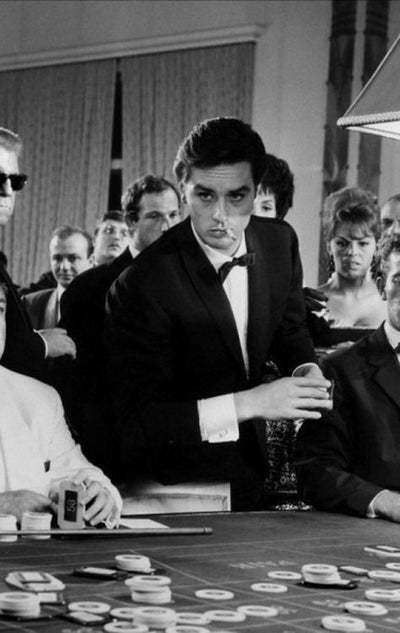
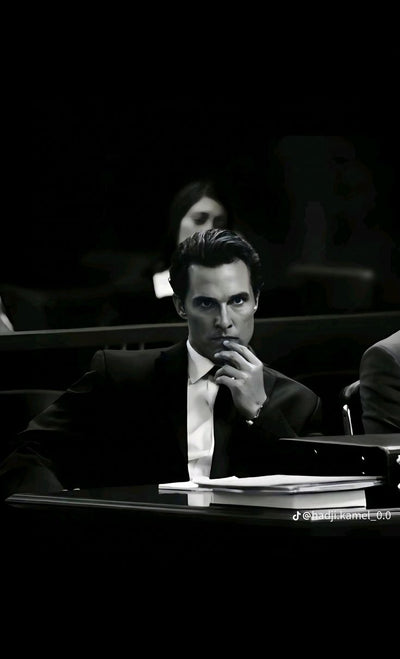
Unspoken rizz is attraction created without words, purely through presence and body language.
The scientific equivalent of this concept is "nonverbal charismatic signals." Riggio and his colleagues' research showed that facial expressions, tone of voice, and gestures create a charismatic impression independently of verbal content. Participants watching 30-second muted videos of political leaders were able to rate the leaders' charisma, competence, and trustworthiness with high accuracy without hearing what they said.
In practical terms, unspoken rizz consists of the following components: Eye contact – signals both interest and trust. Posture – upright but not rigid, open and present. Tempo – moving like someone who is not in a hurry, confident in their core message. Tolerance for silence – being able to use pauses without feeling the need to fill them.

Is Charisma Innate? Can It Be Learned?
This question is the most crucial point in the rizz debate.
Short answer: Partially innate, largely learnable.
Riggio has long argued that the core components of charisma, such as emotional expressiveness and social sensitivity, can be developed through training. A 2011 training study by Antonakis and colleagues showed that executives who received leadership and public speaking training exhibited measurable increases in perceived charisma.
When it comes to self-confidence, remember Albert Bandura's 1977 theory of self-efficacy: the belief in self-efficacy is nourished by past successes, observing others, social encouragement, and physiological states. All of these are variables that can be externally regulated.
And perhaps the most important finding comes from a research analysis published by GQ: people described as having high rizz often share this — "It changed when I stopped trying to be someone else." Introspection, authenticity, and not worrying about the small things. It's not a performance, but a relaxation.
Most Rizz-Filled Historical Figures
Socrates: He never wrote books. He never commanded an army. But with the power of his speech, he gathered the brightest minds of Athens around him, convinced them to question, and is still talked about thousands of years later. Socrates's "rizz" came not just from verbal skill, but from his presence – this is always felt in Plato's dialogues.
Cleopatra: History books exaggerate her appearance, but contemporary accounts tell a different story. What captivated the most powerful Roman generals of her time, like Julius Caesar and Marcus Antonius, was not her physical beauty, but her multilingualism, her way of listening, and how she used her intelligence and wit. The ancient historian Plutarch wrote: "The music of her voice, the richness of her language – these could win wars."
Richard Feynman: One of the greatest physicists of the 20th century. But his real impact came not from his Nobel Prize, but from his ability to explain complex ideas to ordinary people. The "Feynman technique" is still taught today because the clarity in his explanations was not just a pedagogical tool; it was his charisma itself.
What do these three figures have in common? Genuine interest, verbal clarity, emotional presence, and lack of artifice. None of them seemed to be applying a "technique"; they were simply at the core of who they wanted to be.

Rizz vs. Game: What's the Difference?
There's a significant difference between "game" (pickup techniques) and "rizz." Understanding this difference shows which one is worth developing.
Game: Defined techniques, tested patterns, pre-prepared lines. Goal: To produce a specific outcome in a manipulative way. It might yield short-term results, but in the long run, it's both exhausting and unsustainable.
Rizz: Authentic social capacity. Creating attraction without using any techniques, simply by being who you are. It works in dating contexts, as well as in job interviews, making new friends, and networking.
The consistent finding of research is this: people detect performative charm, canned lines, and fictional "spontaneity" with surprising accuracy. The true power of charisma lies in the opposite direction: genuinely being present.
7 Scientific Ways to Develop Rizz
1. Unleash your emotional expressiveness
Most boys are taught from childhood to carry their emotions expressionlessly. But emotional expressiveness – letting what you feel show in your face and voice – is the primary component of charisma. This isn't a deliberate performance; it's about letting go of tension.
Practice: Don't let your face remain completely neutral when you speak. If something genuinely interests you, show that interest on your face.
2. Learn to truly listen
The most consistent thing said about people with "rizz" is this: they make you feel like they are fully listening. This isn't a technique; it requires genuine curiosity.
Practice: When someone is speaking, don't prepare your answer in your head. Just listen. Then, speak based on what they said.
3. Use eye contact naturally
Research shows that eye contact signals interest, trust, and social dominance. The question "How long should I make eye contact?" is the wrong question – aim for a natural, unevasive gaze that doesn't try to intimidate.
4. Use silence
Feeling the need to fill silences is often a reflection of insecurity. Charismatic people tolerate silence, and this tolerance paradoxically makes them seem more powerful.
5. Improve your verbal fluency
Be prepared in the areas you want to talk about. Explain abstract ideas with concrete examples. Use metaphors. Notice and reduce unnecessary filler sounds like "um," "uh," "you know."
6. Energy management
The human brain reads energy states at a surprising speed. Being an "energy emitter" – showing passion, curiosity, and positive social energy – creates attraction. Being an "energy vampire" does the opposite. Know what makes you an energy emitter and strive to be that.
7. Genuine interest: Cliché but the most powerful
The point researchers and people discussing rizz always return to is this: genuinely finding other people interesting. Wanting to understand them. This interest cannot be faked, but it can be developed. Nurturing your curiosity, spending time with different people, practicing listening – all these grow this interest.
How to Develop "Unspoken Rizz": A Guide to Body Language
Nonverbal communication research offers some consistent findings:
Posture: Shoulders back, chest open, back straight. Not tense but relaxed and present. This posture signals both confidence and accessibility.
Movement tempo: Moving like someone who is not in a hurry creates the impression of someone in control of their time. Fast movements are often interpreted as a sign of anxiety.
Facial expression: Instead of remaining completely neutral while listening, partial, genuine reactions – a slight smile, a raised eyebrow – are the foundation of expressiveness.
Tone of voice: Dropping your voice at the end of a sentence signals confidence. Raising your voice at the end of sentences signals uncertainty or seeking approval.
Touch: Light, brief touches appropriate to the cultural context – like a gentle touch on the shoulder – signal connection and warmth. Excessiveness causes discomfort.
Rizz for Introvert Men: Silent Attraction
A common misconception: Rizz belongs only to extroverted, talkative, socially dominant people.
Research does not support this. There's nothing preventing introverted people from being charismatic; it just operates through different channels. Deep listening, thoughtful responses, unexpected observations—these create a different but highly powerful attraction.
The concept of "unspoken rizz" comes into play here: attraction formed without words, solely through presence and eye contact. This is often the natural strong suit of introverted men if they stop tensing up and feeling obligated to talk.
Authenticity: The Secret Foundation of Rizz
This is the common thread that runs through all research and personal narratives.
Performative charm—canned lines, intentional "spontaneity," acting like someone else—might work in the short term. But the brain detects inauthenticity. And this detection leads to a loss of trust.
True rizz flows from the inside out. Knowing who you are, carrying that without needing to defend it, genuinely caring about others—this social energy emanating from such a foundation cannot be faked.
That's why the most consistent advice is this: Before learning techniques, examine your relationship with yourself. Stop imitating others. Don't sweat the small stuff. And keep your curiosity alive.
Rizz, in its internet sense, means "it factor" or "attraction power." It was Oxford's word of the year for 2023.
But what is it, really?
Ronald Riggio, who has researched charisma for 45 years, summarizes it as: a combination of emotional expressiveness, verbal ability, social sensitivity, a calm presence, and the capacity to influence. And all of these, in varying degrees, can be developed.
From a brain perspective: Reliable social signals, genuine enthusiasm, and authentic interest—these activate both dopamine and trust systems, drawing others to you.
From a practical perspective: Turning inward, letting go of tension, truly listening, and not sweating the small stuff.
From a historical perspective: Cleopatra, Socrates, Feynman—different eras, different fields, but the same core: the state of truly being present.
Rizz is not a technique. It's a state of being.
And this state can be improved a little more each day.
For more on social attraction, communication, and building a high-value masculine identity: Browse the entire digital book archive of Erkek Benliği →
Rizz and Dating: Modern Attraction Dynamics
The modern dating environment—Tinder, Instagram, online communication—has made rizz both more important and more challenging.
In face-to-face communication, tons of non-verbal cues come into play: tone of voice, facial expressions, posture, energy. But in online communication, most of these channels disappear. All that remains are words and their timing.
That's why "written rizz" stands out as a distinct skill. Short but specific messages—not "general," but unique to that person. Interest without expectation—no anticipation of reciprocation. Gentle teasing, but never belittling. And perhaps most importantly: knowing when to be silent.
However, digital communication has a limit: true rizz is tested face-to-face. The attraction you build on screen either doubles or collapses when you meet in person. Therefore, digital rizz is ultimately a preparation for real-life skills.
The Fine Line Between Rizz and Abuse
Charisma also has a dark side. And we need to talk about it.
The power of social influence—the capacity to affect people—is a tool. Its intended use determines everything.
True rizz aims to build mutual connection. It makes the other person feel valued, connects, emanates energy. Manipulative charm, however, reduces the other person to a target and weaponizes their emotions.
Understanding this difference is important both ethically and practically. Because the brain eventually perceives manipulative intent, and this perception destroys both the relationship and one's reputation. Long-term social capital comes from genuinely caring about people.
The Social Impact of Rizz Culture
The viral spread of rizz, according to some psychologists, highlights something: people needed a new language for social skills.
The word "charisma" was heavy, abstract, felt unattainable. "Rizz" is young, playful, democratic. You can say "You've got rizz," and it's both a compliment, an observation, and an inspiration.
As Dr. Sarah Chen from Stanford emphasizes, rizz culture also carries a risk: turning charismatic behavior into a performative competition. Watching "rizz videos" on social media, consuming someone else's social success, is very different from developing real social capacity.
True development happens in real life and with real people. Low-stakes social interactions—talking to the cashier at a cafe, striking up a conversation with a stranger while waiting—are where this muscle gets stronger.
Is It Possible to Measure Rizz?
Several tools have been developed in psychology to measure charismatic personality. Riggio's "Social Skills Inventory" (1989) separately measures emotional expression, verbal ability, social control, and other components.
The findings of these measurements are interesting: the components of charisma can develop relatively independently. Someone with strong verbal skills but low emotional expressiveness, or vice versa, is possible. Identifying these components separately shows which one's development will create the greatest impact.
To identify your own strengths and weaknesses, ask these questions: Do people truly become interested in the middle or at the end of my conversation? Does the energy change when I enter a room? Do I easily connect with new people? Do people remember our conversations?
The answers to these questions indicate which component you need to develop.
W Rizz vs. L Rizz: Internet Slang
To complete, a few derivative terms:
W rizz: "W" (win) rizz—high charismatic impact, creating strong attraction in social settings.
L rizz: "L" (loss) rizz—missing social opportunities, turning attraction into a backlash.
Unspoken rizz: Attraction created without words, solely through presence and body language. Considered the highest form.
Rizz up: To impress someone, to attract their interest through verbal and non-verbal communication.
These terms are fleeting, but the underlying concept—the ability to create attraction and connection in social interaction—is timeless.
To Develop Rizz This Week
Theory is enough. Concrete steps:
For emotional expressiveness: Don't tense your face in a conversation today. When something is truly funny, smile fully, not halfway. When someone says something interesting, show it on your face.
For listening: In a conversation today, stop preparing your answer. Just listen. Then build on what they said.
For verbal fluency: In your next conversation, describe something abstract with a concrete metaphor. Instead of "This job got complicated," say "This job drew a veil of fog over itself."
For silence: When you feel compelled to fill a silence in a conversation, just stop. Just stop. Wait two seconds. Feel what happens.
For genuine interest: Ask someone you meet today a question you are truly curious about. Why did they choose that topic, why do they care, how do they feel?
Small things. But these small things accumulate to build character.
Leaders with "Rizz" Throughout History: What's the Common Thread?
When examining historical figures who left their mark with charismatic power, a recurring pattern emerges.
Winston Churchill: What kept Britain standing during the darkest period of World War II was not armies, but Churchill's speeches. The "We shall fight on the beaches" speech was not merely words; it created a nation through its tone, rhythm, pauses, and the weight of conviction in his voice. Churchill was not born a perfect orator; he had a stutter in his youth and practiced for hours.
Frederick Douglass: An American writer who escaped slavery and became one of the most powerful speakers of the 19th century. Those who listened to him recounted being transported to another reality from where they were. The secret to Douglass's impact was authentic anger and authentic hope—not performative, but lived experience.
Mustafa Kemal Atatürk: From a historical perspective, his capacity to re-mobilize a weary and fragmented society under the conditions of his era cannot be explained solely by military success. The power of his rhetoric, his presence, and a clear vision—these are classic components of charismatic influence.
What do all these figures have in common? Authenticity. They spoke for something they truly believed in. And this belief made their technical skill come alive.
Frequently Asked Questions
What is the difference between rizz and charisma? Rizz is the internet generation's version of charisma, used especially in a romantic context. Charisma is a broader and more established concept. But the fundamental components are the same.
Can an introvert have high rizz? Yes. Rizz does not require extroversion; it operates through different channels. An introvert's "unspoken rizz"—a silent but powerful presence—can often be more impressive than an extrovert's noisy energy.
Can rizz be learned? Research says yes. Emotional expressiveness, verbal fluency, listening skills—all of these can be improved with practice. Regardless of the starting point.
Is rizz only for dating? No. Strong social capacity works in job interviews, new friendships, networking, leadership—in every human relationship. Dating is just the most visible example.
Does rizz arise from forcing it? Quite the opposite. Research and personal anecdotes consistently show that forced charm repels the other party. True rizz comes from freeing yourself from performative effort.
Components of Rizz and How to Develop Them
Below are the five core components of rizz/charisma and a starting point for developing each:
Emotional expressiveness: Show what you feel on your face and in your voice. Stop tensing up, filter your reactions.
Verbal fluency: Explain abstract ideas with concrete examples. Reduce filler sounds. Use metaphors.
Social sensitivity: Truly listen. What is the other person feeling? Where is the energy of the room?
Posture and presence: Move like someone who is not rushed. Tolerate silence. Keep your body language open.
Authenticity: Don't imitate others. Be genuinely curious. Speak for what you believe in.
The common thread in all these components is this: They flow from the inside out. They are not imitated externally.